
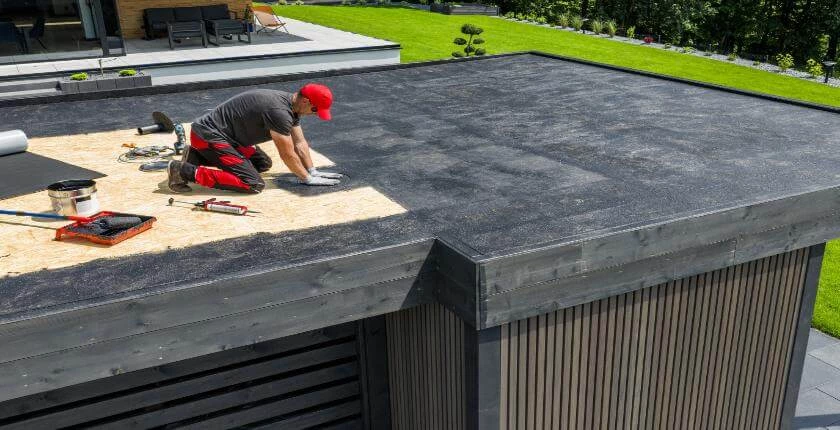
EPDM Rubber Roofing
Get in TouchAt JCR Roofing & Guttering Ltd, we specialise in EPDM rubber roofing, offering durable solutions ideal for both residential and commercial properties. EPDM, a synthetic rubber membrane, is renowned for its flexibility, weather resistance, and long lifespan.
Our expertly installed EPDM systems provide reliable protection against leaks and harsh weather conditions. Covering the area, we are here to enhance your roofing with quality materials and professional service.
Contact us to learn more about how EPDM can benefit your property.
What Is EPDM Rubber Roofing?
EPDM rubber roofing is a durable and weather-resistant roofing solution made from ethylene propylene diene terpolymer. At JCR Roofing & Guttering Ltd, we use EPDM for its flexibility and longevity, which makes it suitable for a range of flat roof applications.
EPDM membranes can withstand extreme temperatures and UV rays, ensuring your roof remains protected over time.
The installation of EPDM involves using seam tapes and adhesives, which provide secure and watertight joins throughout the roof. It is compatible with various roof structures, including residential homes, commercial properties, and industrial facilities.
In compliance with British Board of Agrément (BBA) standards, this roofing system has been tested for excellent performance under harsh conditions. Typically, EPDM roofs have a lifespan of 20 to 30 years, offering significant savings on maintenance and repair costs.
This material is also lightweight, reducing structural stress on your building while providing strong resistance against water ingress. Contact us today to learn more about how EPDM can benefit your property.
What Types of EPDM Rubber Roofing Are Available?
In , we offer several types of EPDM rubber roofing systems tailored to different needs. Each system provides durability, flexibility, and excellent weather resistance, making them ideal for both residential and commercial properties.
Fully Adhered Systems: EPDM is glued directly to the roof deck, providing a smooth finish. This method uses adhesives like water-based or solvent-based, ensuring a watertight seal.
Mechanically Fastened Systems: Uses fasteners and plates to secure the EPDM, suitable for windy areas. Typically used for roofs that require extra security, the fasteners can be spaced at various distances depending on wind uplift requirements.
Ballasted Systems: Heavy materials like gravel weigh down the membrane, suited for larger projects. The ballast provides thermal protection and prevents membrane displacement over expansive roofs.
Self-Adhered Systems: Uses a factory-applied adhesive for quick installation and an eco-friendly approach. This system is ideal for properties aiming to reduce their environmental footprint, offering excellent performance without the use of solvents.
Contact us for guidance on which type suits your property.
Which Type of EPDM Rubber Roofing Is Best?
Choosing the right EPDM rubber roofing type depends on several factors including installation cost, building size, and local weather conditions. EPDM membranes generally come in standard thicknesses of 1.2mm and 1.5mm, with the thicker option providing better puncture resistance and longevity.
Fully adhered systems offer a neat finish for smaller roofs, using adhesives to secure the membrane to the substrate, which minimises the chance of uplift in windy conditions. Ballasted systems, on the other hand, are ideal for extensive installations on flat roofs and involve using gravel or stone to weigh the membrane down, making them cost-effective but heavier.
Consider your climate and budget. For warmer climates, light-coloured EPDM might be advisable to reflect sunlight and reduce cooling costs.
On the contrary, the classic black EPDM is beneficial for heat retention in colder areas. Each option has its benefits, so we're here to help you decide the best fit for your needs.
Reach out to us for a consultation.
What Surfaces Does EPDM Rubber Roofing Work On?
EPDM rubber roofing works excellently on flat and low-slope roofs, commonly found in commercial buildings and modern residential properties. These types of roofs benefit from EPDM's ability to withstand weather extremes and its excellent UV resistance, making it especially suitable for buildings exposed to prolonged sunlight.
The material is commonly applied as a membrane, and its elasticity accommodates both thermal expansion and contraction.
EPDM is versatile, handling various substrates including plywood, concrete, and fibreglass. The installation often involves bonding the membrane using either an adhesive or fasteners, and it is crucial to ensure that the underlying surface is clean and dry.
EPDM is not recommended for use over asphalt shingles, as the oily residue from shingles can damage the membrane. Additionally, EPDM is compatible with various insulation boards, enhancing thermal efficiency.
If you're, we can help determine if EPDM is right for your roof surface.
When Is EPDM Rubber Roofing Needed?
EPDM rubber roofing is needed when existing roofs suffer from leaks, weather damage, or inadequate insulation. In , extreme weather conditions, such as heavy rainfall or high winds, can wear out traditional roofing materials like asphalt or shingles, leading to costly repairs.
EPDM, renowned for its resistance to UV radiation and temperature fluctuations, provides a durable solution ideal for new builds or re-roofing projects.
Additionally, if you notice water pooling or unusual wear, it might be time to consider EPDM roofing to protect your building and extend its lifespan. This roofing material is resistant to ozone and thermal shock, making it suitable for commercial and residential properties with flat or low-slope roofs.
EPDM sheets come in various thicknesses, typically ranging from 1.2mm to 2.5mm, allowing us to match the specifications to your roofing needs. Contact us to discuss how EPDM roofing can benefit your property.
How Does EPDM Rubber Roofing Work?
EPDM rubber roofing installation involves several steps, each crucial for a durable and reliable finish.
Roof Preparation: We start by cleaning the surface thoroughly to remove dust, dirt, and debris, which could affect adhesion. We inspect for and repair any damage on the deck to ensure a smooth base.
Membrane Layout: We carefully roll out and position the EPDM membrane. With its flexibility, the membrane can accommodate a broad range of temperatures and roofing structures.
Adhesive Application: Our technicians apply bonding adhesive uniformly across the surface, paying special attention to corners and edges, ensuring robust adherence.
Membrane Securing: We methodically smooth out the membrane, eliminating air bubbles, with specialised rollers for a wrinkle-free finish, crucial in preventing water infiltration.
Edge Trimming: Finally, we trim any excess membrane and meticulously seal edges with appropriate waterproofing sealant.
EPDM, known for its UV resistance and watertight properties, is ideal for various property types, from residential homes to commercial buildings. Contact us to find out more.
How Long Does EPDM Rubber Roofing Take?
Most EPDM rubber roofing installations take one to two days, depending on the roof size and complexity. In some cases, for larger commercial properties, the process might extend to three to four days.
The installation starts with thorough preparation, including cleaning and priming the roof substrate to ensure a solid base. Next, we place the EPDM membrane, carefully measuring and cutting to fit unique roof contours.
The membrane is then secured with adhesive or mechanical fastening systems, and seams are sealed using heat welding for added durability. Once installed, EPDM roofs typically require minimal maintenance and provide strong resistance to weathering and UV radiation.
With a lifespan of around 30 to 50 years, they offer long-term reliability. Contact us to arrange your EPDM roofing installation at your convenience.
Who Needs EPDM Rubber Roofing?
Commercial properties and residential homes with flat or low-slope roofs benefit greatly from EPDM rubber roofing. This roofing membrane is particularly well-suited for structures that require an effective, long-lasting waterproofing solution due to its resistance to UV radiation and temperature fluctuations.
We serve a wide range of clients, from small businesses to large industrial buildings, ensuring that each project complies with relevant standards such as BBA certification for quality assurance.
EPDM rubber roofing systems are often chosen for their ease of installation and low maintenance requirements. They can endure harsh weather conditions, including heavy rain and snow, which is crucial for properties prone to severe weather.
If you're a property owner looking to upgrade your roofing system, our experts can provide detailed advice on EPDM suitability and the installation process. Contact us today to discuss how we can support your roofing needs.
How Much Does EPDM Rubber Roofing Cost?
EPDM rubber roofing typically costs between £45 and £70 per square metre. This price range covers materials, installation, and basic labour costs.
Factors affecting the total cost include roof size, membrane thickness, and whether additional structural work is needed, such as roof deck repairs or insulation upgrades. EPDM membranes are commonly available in thicknesses of 1.2mm and 1.5mm, influencing both durability and price; the thicker membranes offer enhanced resistance to weather elements.
Installation may involve specialised equipment such as seam rollers and adhesives designed for rubber membranes to ensure a secure bond. Larger projects might also require ancillary services like drain installation or edging trims.
We provide free quotes and detailed cost breakdowns to ensure transparency and no hidden surprises. Contact us to discuss your specific project requirements and get an accurate estimate.
What Are the Benefits of EPDM Rubber Roofing?
EPDM rubber roofing offers several benefits for properties:
Durability: Resistant to UV rays, ozone, and extreme temperatures, EPDM can withstand adverse weather conditions. Its flexible nature allows it to adapt to building movements, preventing cracks and leaks.
Cost-Effective: With a lifespan typically ranging from 20 to 30 years, EPDM reduces the need for frequent repairs and maintenance, saving you money in the long run. Its simple installation process can also lower upfront costs.
Eco-Friendly: Fully recyclable, EPDM contributes less waste to landfills. It can also be used with green roofing systems, promoting environmental sustainability.
Versatility: Suitable for various roof types and buildings, such as commercial, industrial, and residential properties. It can be applied to flat and gently sloping roofs with ease, using either ballasted, fully adhered, or mechanically attached installation methods.
Get in touch today to explore how these benefits can improve your property.
Why Choose JCR Roofing & Guttering Ltd for EPDM Rubber Roofing?
Choose JCR Roofing & Guttering Ltd for expert installation of EPDM rubber roofing. Our experienced team ensures meticulous attention to detail in every project.
We use durable EPDM materials, known for their excellent resistance to UV rays and ozone, which extends the roof's lifespan. Our installation techniques include fully adhered, mechanically attached, and ballasted methods, allowing us to cater to various building types, from residential homes to commercial properties.
Our skilled team is proficient in using equipment such as infrared seam testers and hot-air welders to achieve a flawless application. Serving the area, we adhere to recognised industry standards like BS 6229:2018 for flat roofs, assuring you of the quality and safety of our work.
Contact us to experience our professional service firsthand.
EPDM Rubber Roofing: Frequently Asked Questions
What is the lifespan of EPDM rubber roofing?
EPDM rubber roofing typically lasts 30 to 50 years, depending on maintenance and environmental conditions. Regular inspections can help maximise its lifespan.
How is EPDM rubber roofing maintained?
Maintenance for EPDM roofing involves regular cleaning and annual inspections to check for damage or wear. Quick repairs of any faults prolong the membrane's life.
Is EPDM rubber roofing suitable for large commercial roofs?
Yes, EPDM is ideal for large commercial roofs due to its ease of installation and cost-effectiveness. The ballasted system is particularly well-suited.
Does EPDM rubber roofing require insulation?
EPDM roofing does not come with built-in insulation, but insulation layers can be added beneath it during installation for enhanced energy efficiency.
Can EPDM roofing be installed in cold weather?
Yes, EPDM can be installed in cold weather, but adhesive performance is best in temperatures above 5°C. Installation may take slightly longer in colder conditions.
Get a Free Quote for EPDM Rubber Roofing
Upgrade your roof with reliable EPDM rubber roofing.
Related EPDM Rubber Roofing Services
EPDM rubber roofing provides a durable waterproofing system for suitable flat roof applications.
Existing flat roof defects can require flat roof repairs before replacement or renewal.
For complete system renewal, our flat roof replacement service can install an appropriate covering.
Another flat roofing option is GRP fibreglass flat roofing, which provides a seamless finished system.